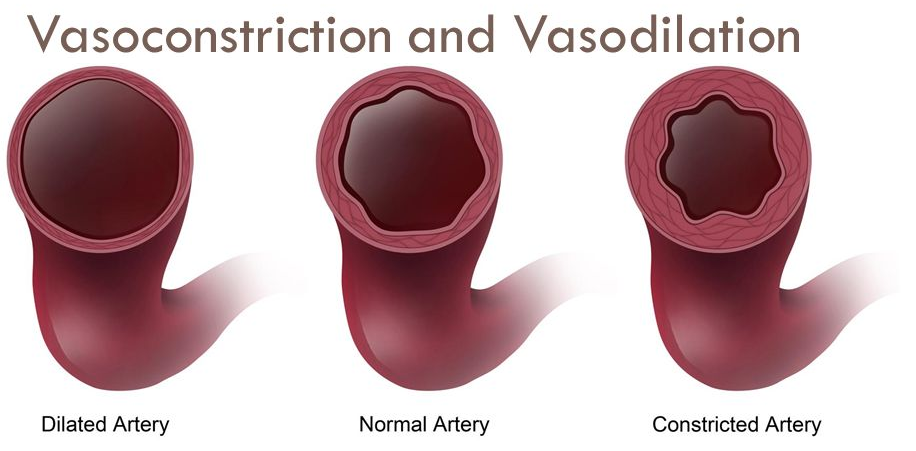
Vasoconstriction and Vasodilation by Unknown, via Effect Index
Vasodilation
Vasodilation is the relaxation and widening of blood vessels, leading to increased blood flow, reduced blood pressure, and visible effects such as flushing and bloodshot eyes, most commonly associated with cannabinoids, nitrites, and alcohol.
Description
Vasodilation refers to the relaxation of smooth muscle in the walls of blood vessels, causing them to widen and allowing increased blood flow through the affected vascular beds. This is one of the fundamental physiological processes that many psychoactive substances affect, either as a primary mechanism of action or as a secondary cardiovascular effect. From a subjective standpoint, vasodilation is often difficult to consciously perceive as a distinct sensation, though its downstream effects — warmth in the extremities, facial flushing, bloodshot eyes, lightheadedness upon standing — are more readily noticed.
The mechanisms of substance-induced vasodilation are varied. Cannabinoids produce vasodilation primarily through CB1 receptor activation on vascular smooth muscle and endothelium, which is why bloodshot, red eyes are one of the most recognizable signs of cannabis use.Nitrites (poppers) are among the most potent vasodilators used recreationally, releasing nitric oxide directly into vascular smooth muscle and producing rapid, intense vasodilation that manifests as head rush, warmth, and flushing.Alcohol causes vasodilation through multiple mechanisms including central sympatholytic effects and direct endothelial action.Certain psychedelics andGHB also produce notable vasodilation.
The physiological consequences of vasodilation include a reduction in blood pressure (as the same volume of blood now occupies wider vessels), increased peripheral blood flow (producing warmth and flushing in the skin and extremities), and a reflexive increase in heart rate as the cardiovascular system compensates for the pressure drop. The bloodshot eye effect from cannabis is caused by vasodilation of the small blood vessels in the conjunctiva, and the same mechanism underlies the therapeutic use of cannabis and certain medications for glaucoma — the reduced intraocular pressure results from improved drainage through dilated vessels.
Harm reduction note: The primary safety concern with vasodilation is its effect on blood pressure. Substances that cause significant vasodilation can produce orthostatic hypotension — a sudden drop in blood pressure when standing up from a seated or lying position — leading to dizziness, lightheadedness, and fainting. This risk is particularly acute with poppers and is greatly increased when vasodilators are combined with other blood-pressure-lowering substances. The combination of poppers with PDE5 inhibitors (Viagra, Cialis) is specifically contraindicated and has caused fatalities through catastrophic hypotension.